Monday, 28 December 2015
Session Eleven: The Epic II - Ayn Rand: The Fountainhead
The Fountainhead is the story of an architect, Howard Roark, who battled against the standards of society, the collectiveness, who believes modern architecture is greater to the style of traditional Greek elements. He wants to break away from the old and create something new. He is an individual who doesn’t want to compromise his values; he is selfish and doesn’t function through others.
Ayn Rand’s purpose of her writing and beliefs of individualism and anti-collectivism comes from her childhood, - as a Russian immigrant saw the rise of Communism in Russia. Her family lost their business, struggling to feed themselves because they were supporter of White Russian’s and they didn’t want to compromise their beliefs.
To be at the top 1% of Architecture you need to be able to situate yourself well and you must compromise your values – as Keating did.
It is translucent in Fountainhead the evil communist character, the Mephisto is Ellsworth S. Toohey. He uses the Banner newspaper to attack Roark and trying to change his mind to compromise his design, give up his values and join the masses.
He uses Roark’s actions of blowing up the housing estate to bring him down in court and show everyone that Roark is a trouble maker. At the beginning his speech the public is totally not in favour of Roark but in the end, after facing his enemies in the courtroom, he wins the battle and builds his modern skyscraper without compromises while getting the girl too.
Ayn Rand created—like so many American Dream stories—a happy ending, a symbol of Capitalist success the architect proudly standing on top of his skyscraper, described as a ‘Tower to Supremacy of Man’.
Sunday, 20 December 2015
Session Ten: The Epic John Dos Passos USA
USA by Dos Passos - at least the three chapter I had to read - is a clever way to make us aware of the 'false' picture of the American Big Dream. The writer used short biographies of three well known person's—Thorstein Veblen, Henry Ford and Frank Lloyd Wright—to introduce us to the 1930's America. The writer had a brilliant social observation? or he was just mesmerized by the social way?
People were taught to believe they could live an idyllic life in America. Just like the film starring Tom Cruise and Nicole Kidman titled 'Far and Away' where they traveled from Ireland where they had abandoned their old life to move to America in hopes of claiming free land in Oklahoma all-the-while having to suffer though trials and tribulations of that is the price of this dream, nothing less than a piece of your soul.
All three chapters in the the Big Money tells a tragic tale of Faustian development, destroy, break away from the old and move on to something new doesn't matter what the cost.
First up, Thorstein Veblen a very bright individual - a non-Marxist critique of capitalism - who broke away from his Norwegian farmer family way of life. Who is a bit different, he can't say yes and at the end he fails because of his unusual personality and social awkwardness.
Tin Lizzie - 'Mr Ford the automobileer' who changed the way people lived for ever creating and standardizing cars. He was a creator, an innovator who didn't have bad habits, who never borrowed money, who only strive for profit and he didn't care about his workers, that is so familiar character we have already met previously.
Henry Ford is a great example of Faust, however it gets too much for him when he gets older. He was afraid that he would be shot or his grandchildren would get kidnapped. So he returned to -the old way - his father's farm where he begun his journey as a child.
The Architect - Frank Lloyd Wright story also a success like Ford's with some difference. He was a famous designer who made something of himself in the world. However, he struggled with bankruptcy and divorce that actually sees him failings as a man.
Saturday, 19 December 2015
Session Seven: Counterculture Howl by Allen Ginsberg
Drugs, sex, rock & roll, experimentation, freedom fighting, dark matter, the words that I would use to describe this poem in one sentence.
It is a riveting piece especially after I listened to Allen Ginsberg reading it on you tube.
This poem, like marmite —you either love it or hate it. I started to love it reading it the more I read it while attempting to make all the pieces slot in, much like doing a puzzle, starting with the outside pieces and working in.
It reminds me of Jim Morrison's music/lyrics what I listened to a great deal as a rebellious teenager.
Jim Morrison's Quote:
There is a YouTube video of Ginsberg' Howl mixed with Jim Morrison's music called the underworld superstars a rare unreleased piece. It's worth watching especially if you don't get Howl-
In the second part his focus is on the industrial civilization and the rejection of the modern world. He uses God Moloch as a reference to a person or thing demanding or requesting a very costly sacrifice.
In Part three he is writing to his friend Carl Solomon who is in the madhouse - saying his madness his rebellion against Moloch and I am with him, and extending my hand in union. Ginsberg gets emotional feels compassion towards his friend. He knows that capitalism is destructive and Society is ruthless.
It is a riveting piece especially after I listened to Allen Ginsberg reading it on you tube.
This poem, like marmite —you either love it or hate it. I started to love it reading it the more I read it while attempting to make all the pieces slot in, much like doing a puzzle, starting with the outside pieces and working in.
It reminds me of Jim Morrison's music/lyrics what I listened to a great deal as a rebellious teenager.
Jim Morrison's Quote:
Expose yourself to your deepest fear; after that, fear has no power, and the fear of freedom shrinks and vanishes. You are free.
There is a YouTube video of Ginsberg' Howl mixed with Jim Morrison's music called the underworld superstars a rare unreleased piece. It's worth watching especially if you don't get Howl-
Allen Ginsberg writes about his personal experiences, his deepest fears
too in the first part of the poem. You can't really relate to him and
this writing unless you tired or lived like him or you have ever felt
deeply depressed in your life. This message has been portrayed using the
word 'who' throughout.
In the second part his focus is on the industrial civilization and the rejection of the modern world. He uses God Moloch as a reference to a person or thing demanding or requesting a very costly sacrifice.
In Part three he is writing to his friend Carl Solomon who is in the madhouse - saying his madness his rebellion against Moloch and I am with him, and extending my hand in union. Ginsberg gets emotional feels compassion towards his friend. He knows that capitalism is destructive and Society is ruthless.
Friday, 18 December 2015
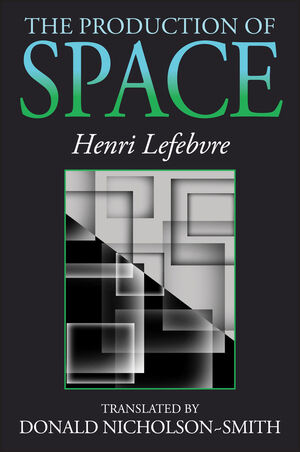
Session Four: Marxist Thinking - The production of space by Henri Lefebvre - 'Social Space'
Let's just forget about the fact that he was a communist for a second and think about him as a philosopher.
Henri Lefebvre is examining with a deep approach into the subject that explaining the two terms involved 'production of space'.
In Hegelianism we are a product of nature (humanity) created by nature.
The concept of classification of social space, Lefebvre talks about it as possibilities from nature, production to works and products. He talks about nature doesn’t know that it creates products only creates what humanity uses.
How would he know what nature feels? Why does he think everything have to be produced?
On one hand the burden of proof to his hilarious theories can easily be flipped around because he makes assumptions about something intangible and clearly beyond his comprehension and the current level of intelligence (or lack of thereof) as if it was a fact, or that his perception is the only valid and undeniable truth, please tell me it isn't so... Smiley face.
Lefebvre comparing nature and its agents as a production entity that doesn't produce anything, only mankind produces.
A product by definition is created by a process of manufacture and processing of materials by some organized agents—man and beast—alike in this sense. God or the flying spaghetti monster dont even factor into my reasoning.
Politics, religion, juridical forms are the product/creation of violence much like mountains are the production/creation of natures and ever violently changing form and to control and change climate.
I think it is arrogant to think that we are the only ones that produce. Nature produces in a more subtle manner and trade as well. For example: Flowers are colorful —they know why they need to be vibrant colours—and produce a perfume smell to draw insects to pollinate them, that helps the flower at the same time bees produce honey out of it (Oops! Nature produced honey). Nature created a free market they are exchanging products and services, trading in its purest form, something we try to mimic and mostly fail...
Having read The production of space, I am reminded that we do not truly understand how nature and its agents/mechanisms function if there's a greater conscience behind it and to the philosopher its far easier to speculate since to imagine the alternative would reveal the real secrets of the universe. Mankind is only able to scrape tiny pieces of which make out our most brilliant inventions/discoveries, and nature does so in manner we can only mostly admire from afar.
Monday, 23 November 2015
Session Six: Postmodernism - Colin Rowe - The Mathematics of the ideal villa and other essays
Rowe compares Palladio's “Villa Foscari” with Le Corbusier’s “Villa Steinhe”.
The essay on ‘Maths’ is rather difficult to get as an ordinary reader.
Rowe starts to analyze the two buildings, layouts, structural rhythms etc. straight at the beginning without any real introduction, so if you don’t know the two villas you won’t have an understanding of Rowe’s essay. Even if you know the buildings you will be lost and confused, as the author seems to make miscalculations about his target audience.
After a fair bit of research, now I can try to comment on Rowe’s article. This fact already tells me that Rowe is able to derive details from the comparison, that perhaps others would miss, showing a degree of complexity that is translated to his writing style.
![]() |
| Villa Foscari |
Palladio's 16th century design of Villa Foscari strongly
based on the symmetry, perspective and values of the formal classical temple
architecture of the Ancient
Greeks and Romans.
![]() |
| Villa Steinhe |
In 1926, the year in which Le Corbusier began to design the Villa Steinhe formulated his famous "5 Points," which became a credo of modern architecture.
These points are in brief:
1) columns supporting concrete slabs
2) roof gardens
3) the open plan
4) ribbon windows
5) the free facade, relieved of structural functions
These two buildings are so different even Rowes declared, that these ‘are superficially so entirely unlike that to bring them together would seem to be facetious’.
I wonder if this article then is Rowes idea of a dry and inappropriate joke.
Rowe set up the basics such as amounts and volumes to be comparable and parallel in the two buildings.
Nevertheless as a reader keep questioning it throughout the essay struggling to get a grip of it.
I'm a visual person, maybe with more graphic explanations would be able to engage with this writing. I don't feel this is about the villas anymore more of a mathematical equation I can't solve.
Tuesday, 17 November 2015
Session Five: The Tragedy of Development, Faust by Goethe, as retold by Marshall Berman
Faust has an engaging personality, so many today’s film characters are based on him. He is still relevant today. Berman achieved a great fictional analysis that is flowing, rational and comprehensive.
Berman describes how Goethe’s Faust presents a refined story that associated to social and political development of Germany within the historical context of a revolutionary western world. Goethe also provided what would seem to be a prophetic understanding of how the aspiration for development will invariably have consequences and result in human tragedy.
Berman splits the story of Faust into three metamorphoses: The Dreamer, The Lover and The Developer. In each section, both development and tragedy occur to some degree.
The Dreamer sees Faust, an insightful and well-educated man who accomplished what he could but now he feels trapped. He wants to change but he can’t, nothing cheers him up. He is having a mid-life crisis.
He is pulled back from the verge of suicide by the sound of Easter Sunday church bells, which sound he knows so well. The memory of his lower class childhood opened himself up to a whole lost dimension of his being that can renew him. He is ready to start a new life in the world, outside of his study in society where he can grow. But it will take "the powers of the underworld" to make such a synthesis work.
Mephisto provides him with "money as an extension of man, with speed to do great things in the world and also this will generate a sexual aura thus making capitalism a leading force of Faust's development.
The Lover begins in the Second Metamorphoses. Faust fall in love with Gretchen - with her innocence that draws him to her, representing something him can no longer have. But like in most love stories it ends with tragedy, loss of her life. She is betrayed by Faust.
To me this is where Faust begins to lose his humanity. He realizes to get to where he wants and to achieve his desires, there are going to be destruction and victims and that he cannot afford to 'feel' any remorse in his path - you would think it is the very notion of capitalism but it is also central in socializm as well.
Faust rises up again in The Developer metamorphosis and leaps entirely into the creation of his new development. "Faust's projects will require not only a great deal of capital but control over a vast extent of territory and a large number of people." His idea of the new modern world would leave no traces of the old world or anythings that comes in his path like the lighthouse and the old couple whom he asked of Mephisto to 'get rid' of.
"He will be a destroyer and creator, the dark and deeply ambiguous figure that our age has come to call "the developer".
Berman describes how Goethe’s Faust presents a refined story that associated to social and political development of Germany within the historical context of a revolutionary western world. Goethe also provided what would seem to be a prophetic understanding of how the aspiration for development will invariably have consequences and result in human tragedy.
Berman splits the story of Faust into three metamorphoses: The Dreamer, The Lover and The Developer. In each section, both development and tragedy occur to some degree.
The Dreamer sees Faust, an insightful and well-educated man who accomplished what he could but now he feels trapped. He wants to change but he can’t, nothing cheers him up. He is having a mid-life crisis.
He is pulled back from the verge of suicide by the sound of Easter Sunday church bells, which sound he knows so well. The memory of his lower class childhood opened himself up to a whole lost dimension of his being that can renew him. He is ready to start a new life in the world, outside of his study in society where he can grow. But it will take "the powers of the underworld" to make such a synthesis work.
Mephisto provides him with "money as an extension of man, with speed to do great things in the world and also this will generate a sexual aura thus making capitalism a leading force of Faust's development.
The Lover begins in the Second Metamorphoses. Faust fall in love with Gretchen - with her innocence that draws him to her, representing something him can no longer have. But like in most love stories it ends with tragedy, loss of her life. She is betrayed by Faust.
To me this is where Faust begins to lose his humanity. He realizes to get to where he wants and to achieve his desires, there are going to be destruction and victims and that he cannot afford to 'feel' any remorse in his path - you would think it is the very notion of capitalism but it is also central in socializm as well.
Faust rises up again in The Developer metamorphosis and leaps entirely into the creation of his new development. "Faust's projects will require not only a great deal of capital but control over a vast extent of territory and a large number of people." His idea of the new modern world would leave no traces of the old world or anythings that comes in his path like the lighthouse and the old couple whom he asked of Mephisto to 'get rid' of.
"He will be a destroyer and creator, the dark and deeply ambiguous figure that our age has come to call "the developer".
Sunday, 1 November 2015
Session Three: Neoliberalism - Dave Hickey's Air Guitar vs Mike Davis' Fear And Money In Dubai
Las Vegas vs Dubai, The desert playgrounds.
I haven't been to either of these places and may even seem quite intriguing, even a dream to visit for some — Mike Davis describes Dubai as a travel guide book, however the truth is both destinations are sin cities with a bit of bling bling.They were both built in large tracts of deserts emerging out of nothing.
Mike, through his writing compares Dubai to America and Las Vegas so it make sense to me to compare the two writers articles.
Dave Hickey’s ‘A Home in the Neon’ is an enjoyable more personal read. A well traveled individual who has lived in many diverse places throughout his life, but eventually has chosen Las Vegas as his ‘home’.
He enjoys the fact that Las Vegas possesses a very strange characteristic for modern America and a lack of a programmed social order. It doesn't matter where you come from, what your qualifications are. It is the cities of opportunities where American —and foreign— Dreams can come true. You just need to gamble and your life might turns around, you start with equal chance at the black jack table.
A city of sin in the more extreme descriptions. But here we have someone describing it as his home.
Dubai is also a Dream —as Mike Davis compares it to Disneyland— "Rubbing your eyes with wonderment", on the other hand in most cases it is not for the everyday Joe. It was created for the 1%. All about labels, Gucci, Cartier, extremes after extremes like snowboarding in the heat. Temptation is everywhere you look. A "Strange Paradise".
It is a paradise for architects and engineers also. It is like a playground. No rules, just dreams and nothing is impossible.
However, this dream comes as a price, other poorer "lower class" people building these dreams for the rich and famous and they are not recognized.
Las Vegas and Dubai both in sheer scale of spectacle and a profligate consumption of water and power. At the scale of still growing consumption our planet will not survive. Might be good for the local economies, for the Sheikh and other minorities but it is actually causing us and humanity more harm than good. Why don't we want to see this? We like meaningless bling bling and we like to dream.
Subscribe to:
Posts (Atom)